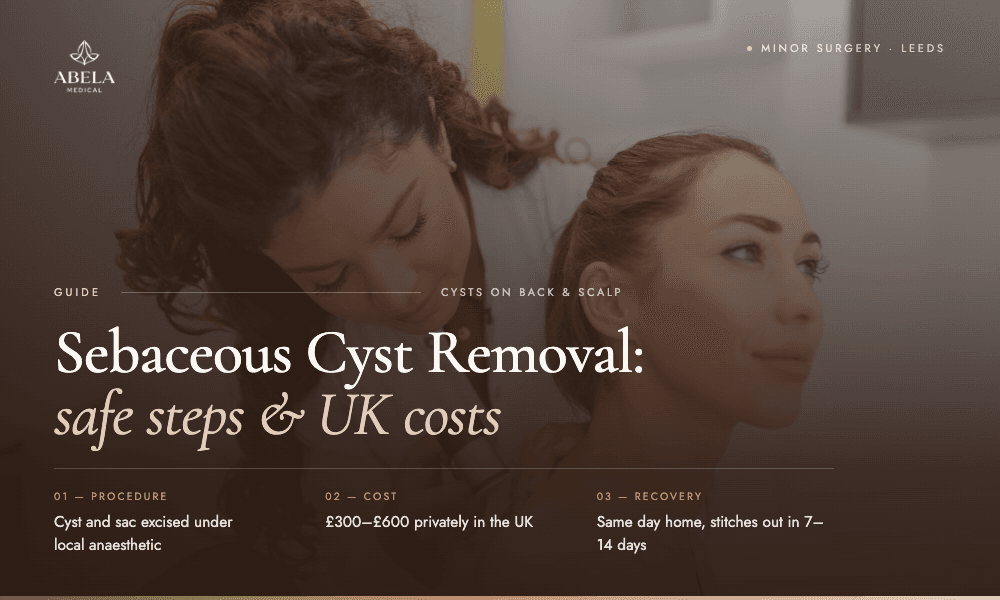
Sebaceous cyst removal is a short surgical procedure that removes a skin cyst along with its sac, usually under local anaesthetic. The whole visit often takes 20 to 45 minutes, and most people return to normal activities the same day. Doctors recommend removing the full sac because a cyst that is only drained tends to fill up again. This guide explains what a sebaceous cyst is, why it forms, how the procedure works, what it costs in the UK, and what recovery looks like. It also covers the situations where removal must wait, such as when a cyst is red, swollen and sore. By the end, you will know exactly what to expect and when to see a doctor.
Key Takeaways
- Full surgical excision removes the cyst and its sac, which keeps recurrence low.
- The procedure uses local anaesthetic and usually takes under an hour
- An infected cyst needs treatment first and removal later
- Squeezing a cyst at home often makes it worse, not better
What Does Removal of a Sebaceous Cyst Involve?
Removal of a sebaceous cyst means a doctor numbs the skin, makes a small cut, and lifts out the cyst along with the thin sac that surrounds it. The sac matters most. If any part of it stays behind, the cyst can slowly refill.
The name itself is slightly misleading. Most lumps people call sebaceous cysts are actually epidermoid or pilar cysts, which are filled with a soft protein called keratin rather than oil. Epidermoid cyst removal follows the same steps, so the everyday name rarely changes the treatment. These skin cysts are benign in almost all cases, meaning they are not cancerous.
Causes of a Sebaceous Cyst
A cyst develops when skin cells that are supposed to flake off the skin move inward and proliferate, creating a sac-like structure that fills with keratin over time.
Some common causes are:
- A blocked or damaged hair follicle
- Minor skin injury or a previous spot
- A history of acne
- Family history, especially for scalp cysts
Cysts are not contagious, and they are not caused by poor hygiene.
Symptoms: How to Tell You Have a Sebaceous Cyst
All cysts have something in common. Watch out for:
- A round mass under the skin which can be moved when palpated
- Growth at a slow pace, taking months or even years
- A tiny black spot (punctum) at its centre
- Pus with a bad odour coming out when the cyst ruptures
- The absence of pain, except when the cyst gets inflamed
Other lumps and bumps, such as lipomas, feel softer and sit deeper, so a doctor should always confirm the diagnosis before any treatment.
Sebaceous Cyst on Back
A sebaceous cyst on the back is very common because the area has plenty of oil glands and is subject to daily friction from clothing and seat backs. Many people only notice one when it catches or rubs.
Sebaceous Cyst on Scalp
A sebaceous cyst on scalp areas is usually a pilar cyst. These often run in families, can appear in small groups, and may be caught by combs and hairbrushes, which makes them sore.

Tired of a Lump That Keeps Catching and Rubbing?
- A cyst that snags on clothing or a hairbrush rarely settles on its own
- Our doctor-led team in Leeds can assess your lump properly and explain your options clearly
How Does Sebaceous Cyst Removal Work?
The procedure is simple and follows the same steps at most UK clinics:
- Assessment. A doctor examines the lump to confirm that it is a cyst and to check its size and position.
- Numbing. Local anaesthetic is injected around the cyst. You stay awake, and the area goes numb within minutes.
- Excision. An incision is made, and the cyst is completely excised, with retention of the cystic sac wherever feasible.
- Closure. Wound closure is done with tiny sutures, and the wound is dressed with a small dressing.
- Aftercare. You leave the hospital on the same day with instructions for wound care at home.
Most people feel the first sting of the anaesthetic and little else. Like any minor surgery, the procedure carries small risks, including bleeding, infection, a visible scar and, occasionally, regrowth of the cyst. A doctor should explain these risks before you decide.
When Removal Must Wait: Treating an Infected Sebaceous Cyst
The symptoms of an infected sebaceous cyst include redness, warmth, tenderness, fast swelling, and discharge of pus. An infection is risky when undertaking surgery, as it may cause complications and poor recovery; hence the need to treat it first.
The treatment may involve:
- Antibiotics administered by a doctor
- Draining pus through incision and drainage
- Warm compresses
After the skin heals for a few weeks, the sebaceous cyst can be entirely excised. According to the NHS guidelines on skin cysts, one should consult a doctor if a lump is painful, hot, or red.
Squeezed It, and It Came Straight Back?
- A drained or burst cyst refills because the sac is still under the skin
- Our clinicians remove the entire sac in a single careful procedure, with honest advice on scarring and healing

How to Get Rid of a Sebaceous Cyst at Home: Why It Fails
Many people search for how to get rid of a sebaceous cyst without surgery. The honest answer is that home methods do not remove the sac, so the cyst nearly always returns.
- Pressure or popping forces keratin to enter surrounding tissues and promotes infection.
- Warm compresses provide relief from cyst inflammation but cannot eliminate it.
- Creams and drawing ointments have no scientific basis.
Some small cysts that cause no pain can simply be left alone and monitored. When a cyst grows, leaks or keeps getting irritated, complete excision is the most dependable option.
Treatment Options for a Sebaceous Cyst
There are three options for treatment selected by doctors:
- Watch and wait method. Recommended for small and unproblematic cysts.
- Incision and drainage. For quick relief from pressure or infection, but the cyst tends to refill because the sac still exists.
- Full surgical excision. Removes the cyst and sac together, so recurrence is unlikely when the whole sac comes out.
Excision gives the most lasting result, which is why most clinics recommend it for cysts that keep growing or getting caught.
Sebaceous Cyst Removal Cost in the UK
Sebaceous cyst removal cost depends on the size, depth and position of the cyst, and on whether it has been infected before. As a general guide, private clinics across the UK typically charge between £300 and £600 for a single straightforward cyst, with larger or more complex cysts costing more. Always confirm the exact price at a face-to-face assessment, because no clinic can quote accurately without examining the lump.
NHS treatment is limited. Most health boards now class cyst removal as a procedure of limited clinical value, so the NHS usually treats a cyst only when it is infected, painful or affecting how you function. That is why many people choose private cyst removal, which offers a short wait, a doctor-led service and removal of the complete sac in one visit. If you have started searching for sebaceous cyst removal near me, choose a regulated clinic where a doctor first examines the lump and talks you through the risks and benefits.
Recovery After Cyst Removal
Healing is usually quick and straightforward:
- Keep the dressing dry for the first 24 to 48 hours
- Simple pain relief from a pharmacy is normally enough
- Stitches come out after about 7 to 14 days, unless dissolvable stitches were used
- Avoid heavy exercise until the stitches are removed
- Expect a small scar that softens and fades over several months
Contact the clinic if the wound becomes increasingly red, hot or weepy, as these can be signs of infection.
Conclusion
Sebaceous cyst removal is a quick, established procedure that addresses both the cyst and the sac it sits in within a single visit, and complete removal remains the best way to prevent recurrence. Let the small and dormant cysts be if you want; first attend to the infection if the skin is inflamed; and never squeeze whatever you do. The surgeons at Abela Medical offer precise minor surgery for cysts in Leeds.
Frequently Asked Questions
Does sebaceous cyst removal hurt?
The sting of local anaesthesia is felt only for a short while. After that, the majority experience a sensation of pressure and movement but not pain.
Will cyst removal leave a scar?
Yes, a small scar is expected after any excision. Doctors place the cut carefully and use fine stitches, and most scars fade to a thin pale line over several months.
Can a sebaceous cyst come back after removal?
Recurrence is uncommon when the whole sac is removed. If a fragment of the sac stays behind, the cyst can slowly refill, which is why complete excision matters.
Is it safe to pop a sebaceous cyst at home?
No. Squeezing forces the contents into surrounding tissue, raises the risk of infection, and leaves the sac in place, so the cyst usually returns larger and sorer.
How long does the procedure take?
Most single cyst removals take 20 to 45 minutes from numbing to dressing. Larger cysts, scalp cysts or previously infected cysts can take a little longer.
Is a sebaceous cyst cancerous?
Rarely. These cysts are benign, but any lump that grows quickly, feels hard and fixed, or bleeds should be checked promptly, and the clinic should send unusual tissue for testing.